
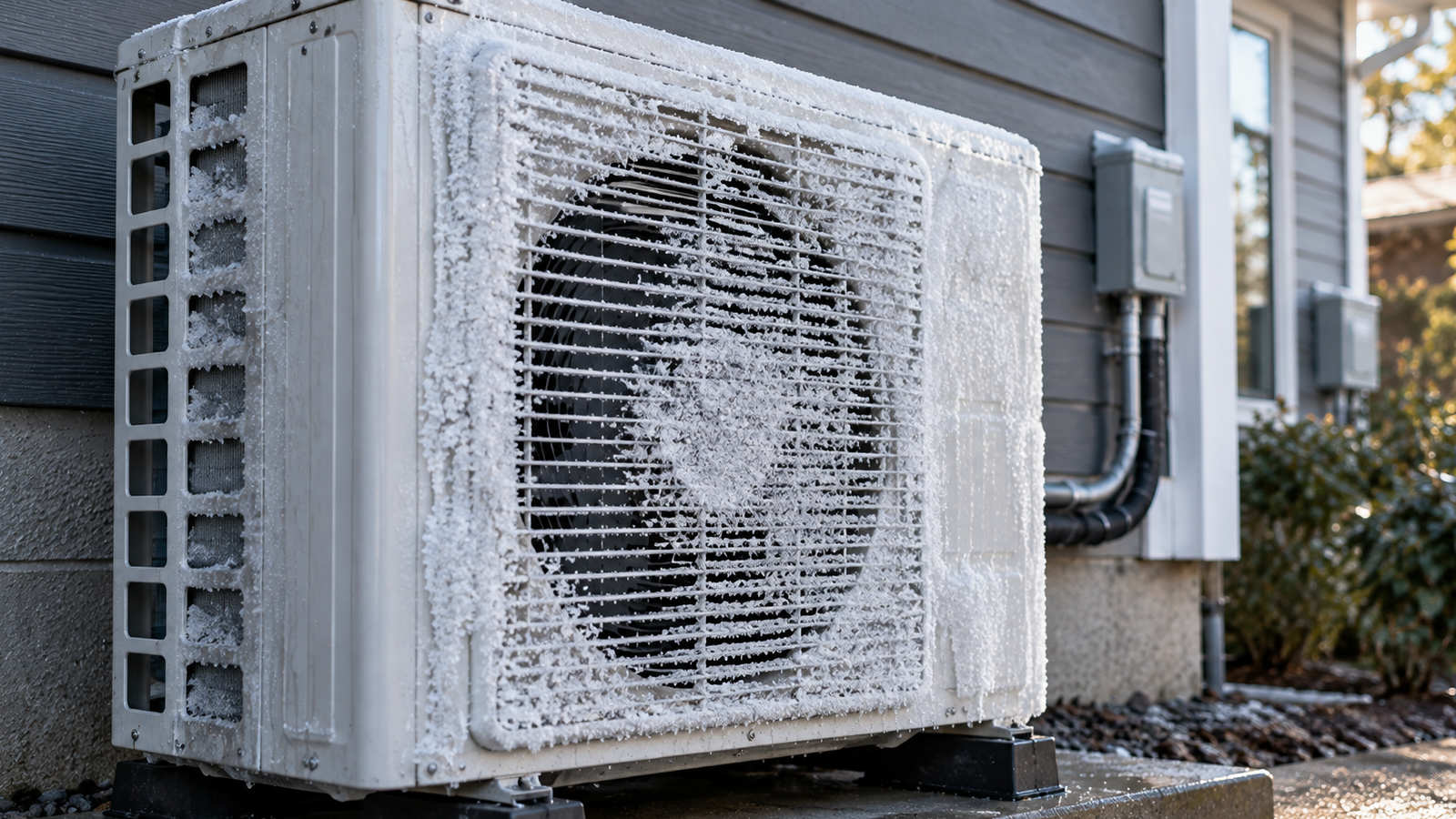
If you walk outside on a cold Ontario morning and notice frost or ice on your heat pump, it is understandable to wonder if something has gone wrong. After all, an outdoor unit covered in frost does not exactly look like a heating system that is having a great day.
The good news is that some frost is completely normal. Heat pumps operate differently from furnaces, and a little frost on the outdoor unit is often part of normal winter operation.
A heat pump freezing up and staying frozen, however, is another story. Thick ice, a unit that cannot clear itself, or a noticeable drop in heating performance can point to a problem that needs attention.
Here is how to tell the difference.
Why Does a Heat Pump Get Frosty in Winter?
When your heat pump is heating your home, the outdoor unit pulls heat from the outside air. Yes, even when it is cold outside, there is still heat energy available in the air.
As the system operates, the outdoor coil becomes cold. Moisture in the air can collect on that coil and freeze. You may see a thin, white layer of frost covering part or even most of the coil.
That alone does not mean anything is wrong.
Heat pumps are designed with winter conditions in mind. When enough frost builds up, the system should automatically run a defrost cycle to melt it away. After the cycle finishes, the heat pump returns to normal heating operation.
The important part is that the frost should eventually disappear. If you keep seeing your heat pump freezing up and the ice never seems to clear, it is time to look a little closer.
What Is a Heat Pump Defrost Cycle?
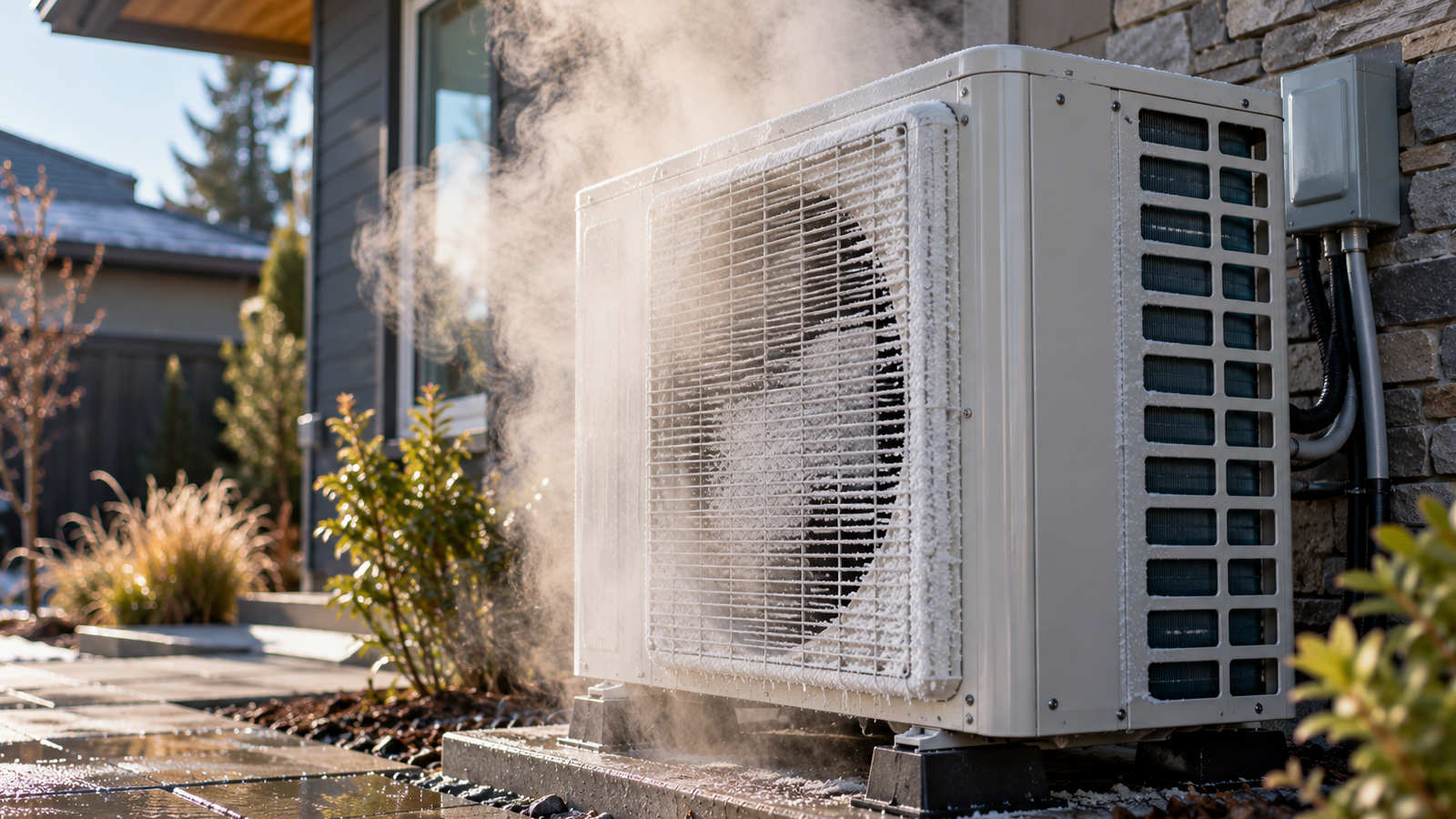
The defrost cycle is basically your heat pump taking a few minutes to deal with the frost on its outdoor coil.
During normal heating, refrigerant moves through the system in a way that allows the outdoor unit to collect heat. During a defrost cycle, the system temporarily changes operation so the outdoor coil warms up enough to melt accumulated frost.
You may notice steam coming from the outdoor unit while this happens. That can look alarming if you have never seen it before, but it is usually just water vapour created as the frost melts.
You might also hear the system change sounds or notice the outdoor fan stop temporarily.
A defrost cycle generally does not last very long. Once the frost has cleared, your heat pump should switch back to heating your home normally.
When Is Ice on a Heat Pump Not Normal?
There is a big difference between a light coating of frost and a heat pump trapped inside a block of ice.
If the outdoor coil remains heavily iced over for an extended period, ice continues getting thicker, or the entire unit is covered, the system may not be defrosting properly.
You may also notice that the house is not staying as comfortable as usual. The heat pump might run for long periods without warming the home properly, or your backup heat may be running more often.
These are signs that a heat pump freezing up may be more than normal winter operation.
You should also pay attention if the fan cannot turn because of ice, you hear unusual noises, or the system repeatedly freezes again shortly after the ice disappears. Those symptoms are worth having checked rather than waiting to see what happens.
Airflow Problems Can Cause a Heat Pump to Freeze
Heat pumps need good airflow through the outdoor coil. Anything that significantly restricts that airflow can make it harder for the system to operate properly.
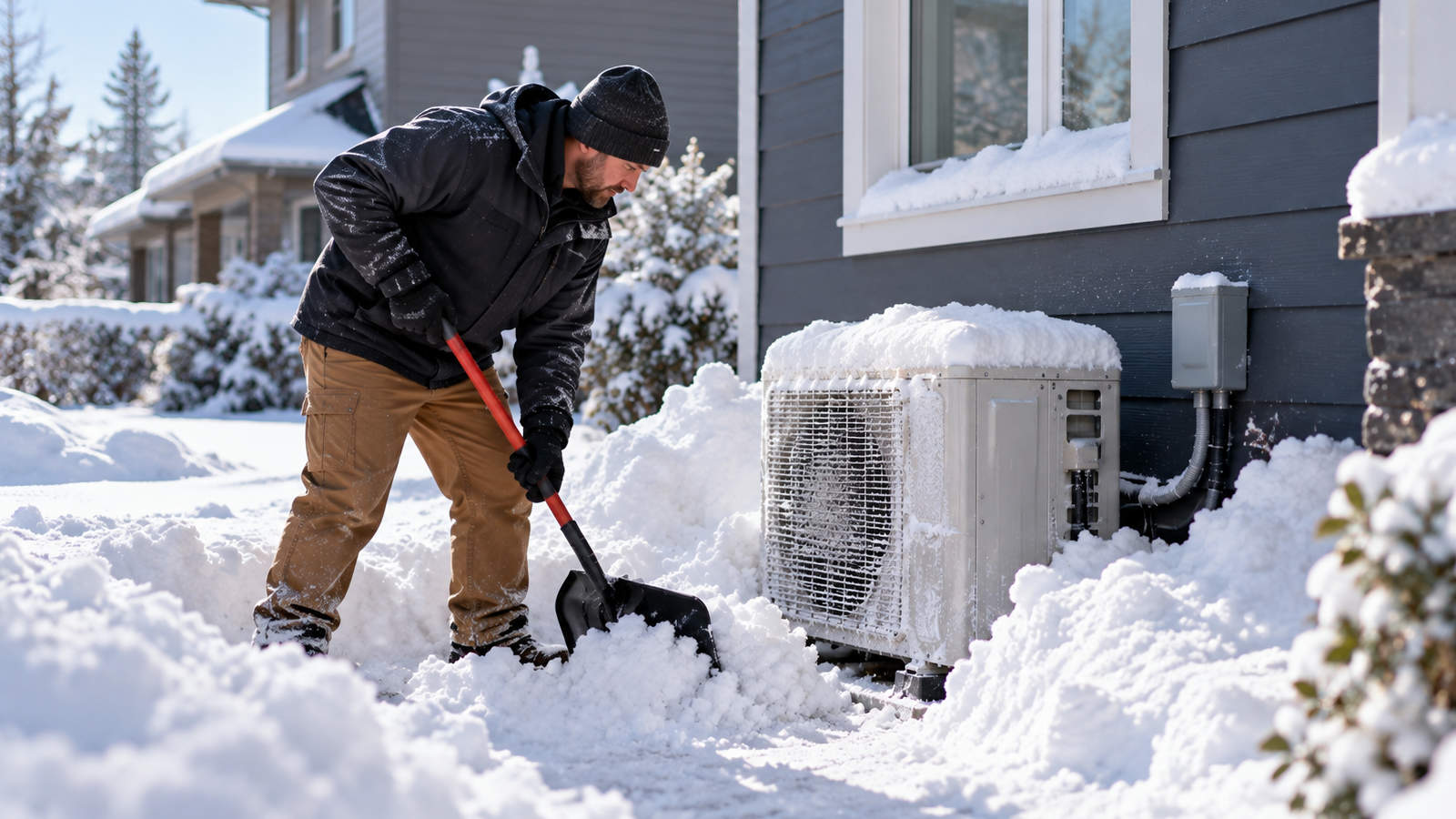
Snow is one of the obvious problems here in Simcoe County. After a heavy snowfall or drifting snow, the outdoor unit can become partially blocked. Leaves, debris, and other material around the unit can cause similar problems.
The heat pump should have enough open space around it for air to move freely.
If snow has accumulated around your unit, you can carefully clear the area around it. Be gentle around the equipment itself. Do not chip, scrape, or hammer ice off the coil. Those components can be damaged much more easily than you might expect.
If clearing snow and debris does not solve the problem, there may be another reason for the heat pump freezing up.
Drainage Problems Can Lead to Ice Buildup
A heat pump creates water when it goes through a defrost cycle. That water needs somewhere to go.
Normally, melted frost drains away from the outdoor unit. If drainage is blocked or water collects underneath the heat pump, it can refreeze.
Over time, that can create a growing layer of ice around the bottom of the unit. In some cases, ice can build up enough to interfere with the coil or fan.
This is one reason proper heat pump installation matters. The outdoor unit needs to be positioned with winter drainage and snow accumulation in mind, especially in our part of Ontario.
If you repeatedly see a large amount of ice forming underneath or around your heat pump, it is worth having the drainage and installation checked.
A Fan Problem Can Cause Freezing
The outdoor fan plays an important role in moving air through the heat pump. If that fan stops working properly, airflow through the outdoor coil can drop considerably.
A fan problem might be caused by the motor, electrical components, controls, or something physically preventing the fan from turning.
If the fan is not running when it should be, shut the system down and arrange for service. Continuing to operate a heat pump with a fan problem can put additional strain on the equipment.
And if ice is preventing the fan from moving, do not try to force it free. This is one of those situations where a service call is safer than experimenting with the equipment yourself.
The Defrost Controls or Sensors May Be the Problem
Your heat pump has to know when it needs to defrost. Sensors and controls help the system decide when to start and stop the defrost cycle.
If a sensor is giving incorrect information or a control component is not operating properly, the heat pump may not enter defrost mode when it should. It may also start a cycle but fail to complete it properly.
From the homeowner’s perspective, the result is fairly simple: the frost keeps building.
A technician can check whether the system is sensing outdoor conditions properly and whether the defrost controls are doing what they are supposed to do. If you are dealing with a heat pump freezing up repeatedly despite otherwise normal conditions, this is one of the areas we may investigate.
Refrigerant Problems Can Also Cause Ice
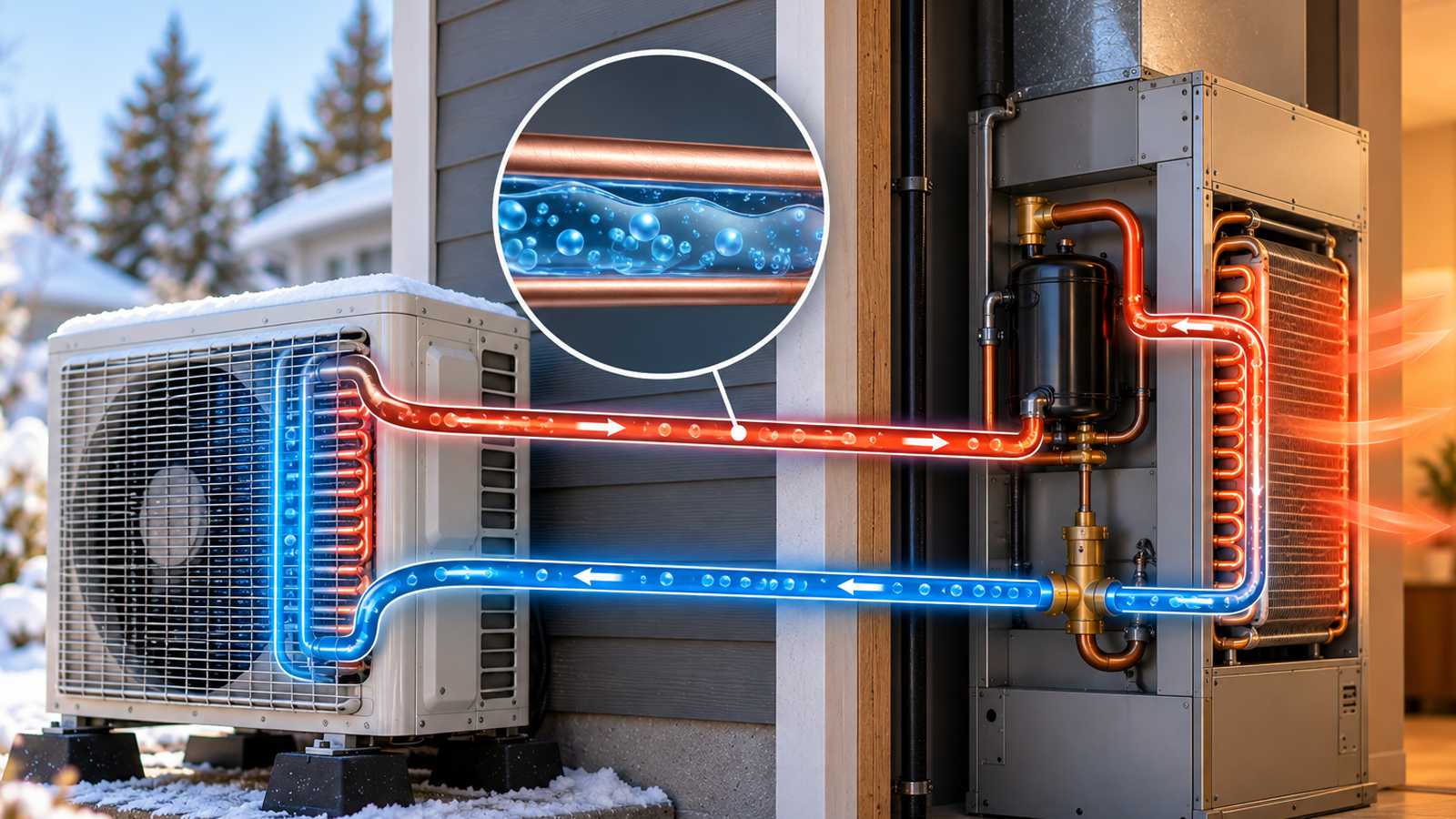
A refrigerant issue can affect how your heat pump transfers heat and may contribute to unusual icing.
Refrigerant operates inside a closed system. It is not something a heat pump should simply “use up” over time. If the refrigerant charge is low, there may be a leak or another issue that needs to be diagnosed.
This is not something you can determine by looking at the outdoor unit alone. The same symptoms can have several possible causes, which is why proper testing matters.
If your heat pump is freezing up and also struggling to heat your home, running constantly, or behaving differently than it normally does, having the system checked is a good idea.
What Should You Do If Your Heat Pump Is Covered in Ice?
Start with the easy things you can safely see.
Look around the outdoor unit and make sure snow, leaves, and debris are not blocking airflow. Give the unit room to breathe and check whether there is obvious ice buildup underneath it.
Then give the system a chance to run through its normal operation. A light layer of frost should eventually be handled by the heat pump’s defrost cycle.
What you do not want to do is attack the ice yourself.
Do not pour boiling water over the unit. Do not use a heat gun, hair dryer, shovel, screwdriver, or anything else to break the ice away. It is very easy to damage the coil, fan, or other components while trying to solve what looks like a simple problem.
If the ice is heavy or keeps coming back, the safer option is to have the cause diagnosed.
When Should You Call for Heat Pump Service?
You do not need to call us every time you see a little frost on your outdoor unit. During an Ontario winter, some frost is expected.
We would rather hear from you when something does not look right, though, than have you wait until the system stops heating altogether.
If the heat pump remains heavily covered in ice, does not appear to complete a defrost cycle, repeatedly freezes, makes unusual noises, or is no longer heating your home properly, it is time to have it looked at.
A heat pump freezing up can have a relatively straightforward cause, but it can also point to a fan, drainage, sensor, control, or refrigerant problem. Finding the actual cause is much more useful than simply getting rid of the ice.
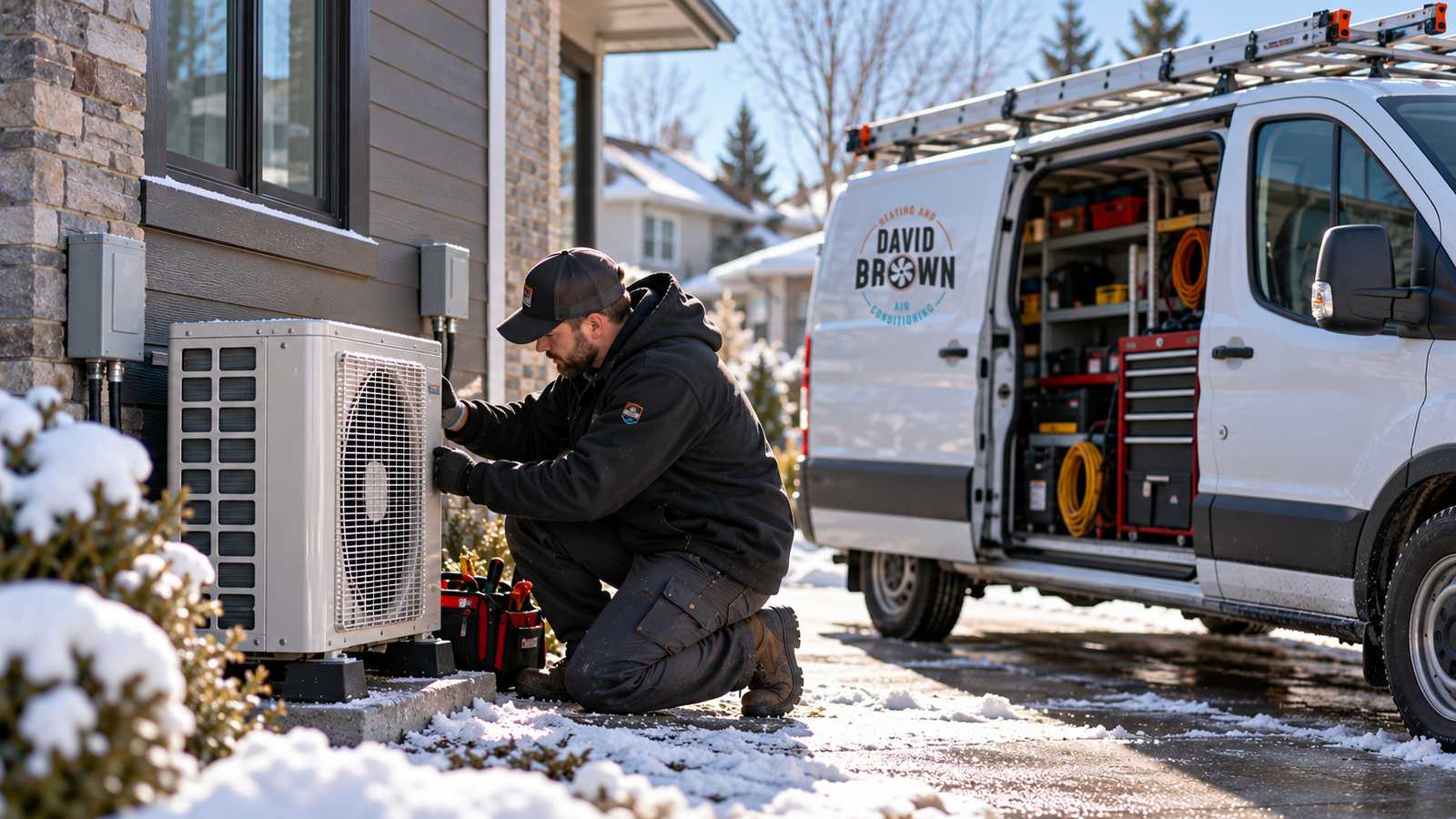
Not Sure If That Ice Is Normal? We Can Take a Look
A little winter frost is part of owning a heat pump. A solid block of ice is not.
If your heat pump keeps freezing up or your home is not staying as comfortable as it should, Dave Brown Heating & Cooling can help figure out what is happening. We service heat pumps throughout Simcoe County and can check the system, identify the cause, and get it back to doing its job properly.