
It’s the middle of summer in Simcoe County. The heat is sticking around, your house isn’t cooling the way it should, and your air conditioner is… struggling.
Maybe it’s running constantly. Maybe it’s making a noise it didn’t make last year. Or maybe it’s already been repaired once, and now it’s acting up again.
That’s usually the moment the question hits:
Do you fix it again, or is it time to replace it?
When it comes to AC repair vs replacement, this isn’t a guessing game. There are a few clear factors that can point you in the right direction—and help you avoid pouring money into a system that’s on its way out.
The Real Question Isn’t “Can It Be Fixed?”—It’s “Should It Be?”
Almost any air conditioner can be repaired.
That’s not usually the problem.
The real issue is whether that repair actually makes sense for you long-term. A quick fix might get things running again today, but it doesn’t always solve the bigger picture.
If the system is aging, inefficient, or starting to break down more often, that repair can turn into the first of several. What looks like the cheaper option now can quietly become the more expensive one over time.
This is where the AC repair vs replacement decision really starts—looking beyond the immediate problem and thinking about what comes next.
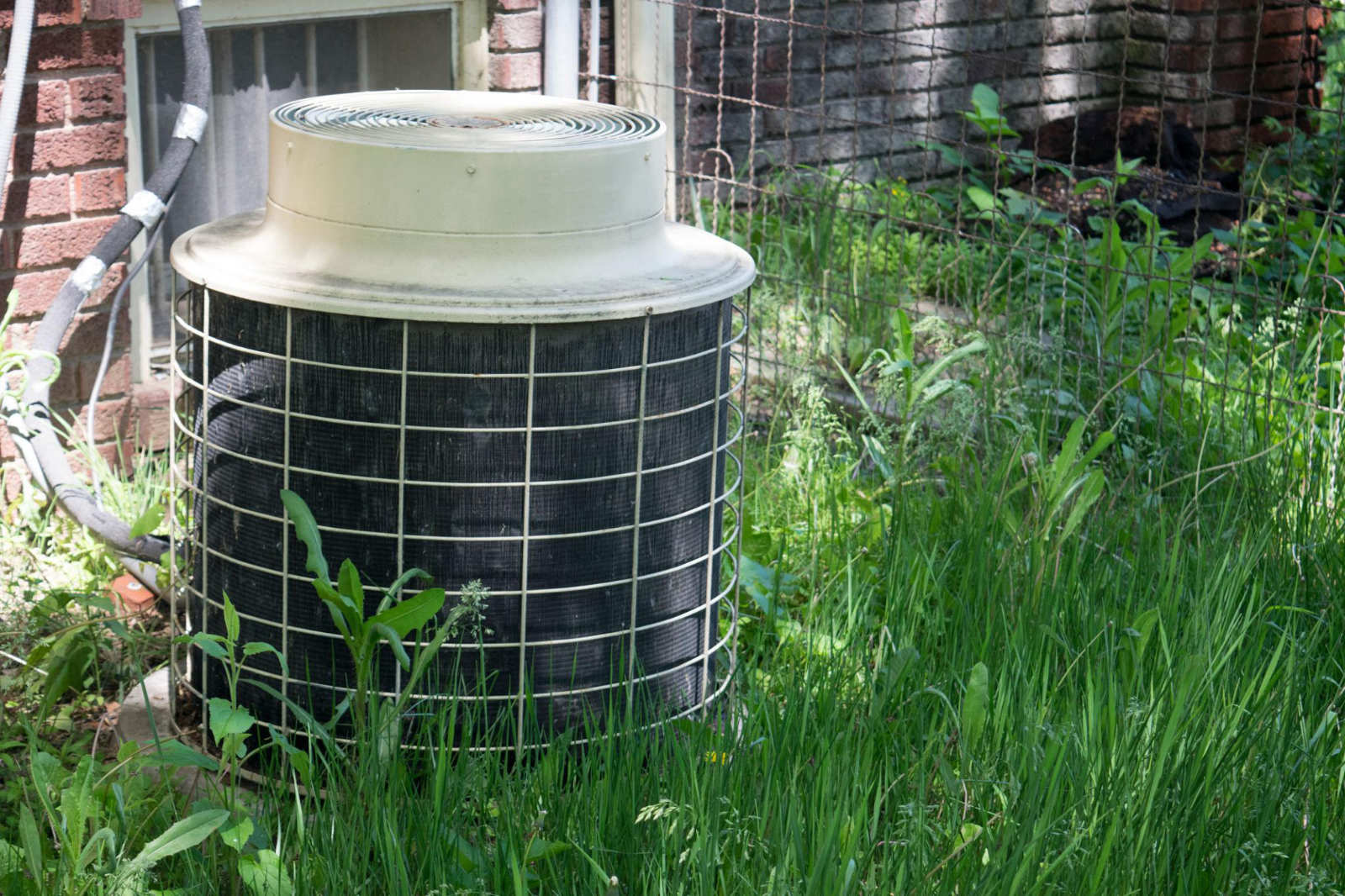
How Old Is Your Air Conditioner, Really?
Age plays a bigger role than most people think.
In Ontario, most air conditioners last somewhere between 10 and 15 years. That range can shift depending on how the system was installed, how often it’s been maintained, and how hard it’s had to work through our summers.
And in places like Barrie and across Simcoe County, those temperature swings don’t do your system any favours. Hot, humid stretches followed by cooler nights mean your AC is constantly adjusting and cycling.
As systems get older, a few things tend to happen:
- They lose efficiency
- They run longer to achieve the same result
- Components wear down and become more prone to failure
Even if everything still technically “works,” it may not be working well—or cheaply.
The 50% Rule: A Simple Way to Cut Through the Noise
If you’re stuck deciding between repairing and replacing, there’s a simple guideline that can help.
It’s called the 50% rule.
If the cost of a repair is close to—or more than—50% of what a new system would cost, replacement is usually the smarter move.
For example:
- A major repair costs $2,500
- A new system costs $5,000–$6,000
At that point, putting money into the old unit starts to feel like a short-term patch rather than a long-term solution.
This rule isn’t perfect, but it’s a reliable way to step back and look at the bigger financial picture instead of just the immediate bill.
Are You Stuck in the Repair Cycle Without Realizing It?
This one sneaks up on people.
A service call here. A part replacement there. Maybe another issue the following summer.
Individually, none of these feel like a breaking point. But together, they start to form a pattern.
If your air conditioner:
- Needs repairs every year (or more)
- Has already had multiple components replaced
- Keeps having “different” issues pop up
…it’s often a sign the system is wearing out as a whole, not just in one isolated spot.
This is where the AC repair vs replacement conversation shifts. It’s no longer about fixing one issue—it’s about whether the system itself is becoming unreliable.

What’s Your AC Actually Costing You Every Month?
Repair costs are only part of the equation.
Older air conditioners are significantly less efficient than newer models. Even if they’re still running, they’re often using more electricity to do the same job.
That shows up on your hydro bill.
In Ontario, where summer cooling costs can climb quickly, that difference adds up. A newer high-efficiency unit can reduce energy usage enough that, over time, it helps offset the cost of replacement.
So the real question becomes:
What is your current system costing you month after month—and is that number creeping up?
When Does AC Repair Still Make Sense?
Not every situation calls for replacement.
In many cases, repairing your air conditioner is absolutely the right move.
Repair usually makes sense when:
- The system is under 10 years old
- The issue is minor or isolated
- There’s no history of repeat breakdowns
- The repair cost is reasonable relative to the system
In these situations, a repair can extend the life of your unit and keep things running smoothly without a major investment.
This is an important part of the AC repair vs replacement decision—sometimes the simplest solution really is the best one.
When Replacement Stops Being Optional (And Starts Saving You Money)
There’s also a point where replacement stops feeling like a big decision and starts feeling like the obvious one.
That usually happens when:
- The system is 15+ years old
- A major component (like the compressor) fails
- Repairs are becoming frequent or expensive
- Cooling is inconsistent or struggling to keep up
- Indoor comfort is noticeably declining
At this stage, continuing to repair the system often means putting money into something that isn’t going to deliver reliable results.
A new system, on the other hand, gives you:
- Consistent cooling
- Better energy efficiency
- Fewer unexpected breakdowns
- Lower long-term costs
These are the moments when replacing your AC isn’t just about fixing a problem—it’s about improving how your home feels every day.
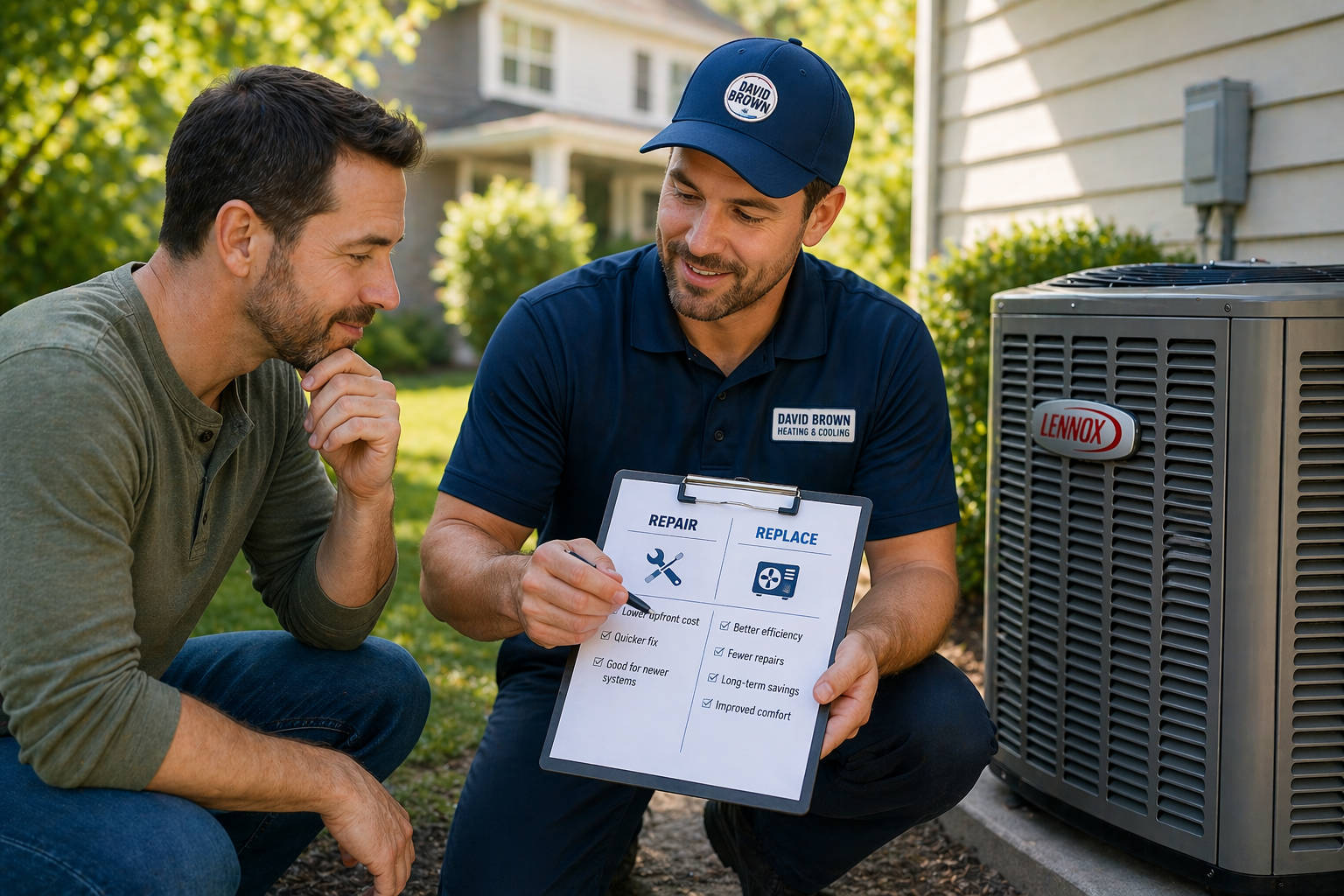
Still Not Sure? Here’s How to Make the Right Call With Confidence
If you’re still on the fence, you’re not alone.
The AC repair vs replacement decision isn’t always black and white, especially when the system is somewhere in the middle of its lifespan.
What helps most is having a clear look at:
- The current condition of your system
- The cost of the repair
- The likelihood of future issues
- The efficiency of what you currently have
From there, it becomes much easier to weigh your options without second-guessing.
Deciding between AC repair vs replacement comes down to a few key things: age, cost, efficiency, and reliability.
If your system is newer and the issue is small, a repair can make perfect sense. If it’s older, struggling, and costing you more over time, replacement is often the smarter long-term move.
Either way, the goal is the same—keeping your home comfortable without wasting money on the wrong solution.
And once you know what to look for, that decision gets a whole lot easier.